How music united and empowered disenfranchised women.
Public Officials Managing COVID-19
How do their lives differ from ours when the virus affects all?
The outbreak of COVID-19 has impacted people from all walks of life, from the homeless to the billionaires of the world.
While people often focus on healthcare workers and emergency responders, politicians and other public officials are working tirelessly behind the scenes to keep the United States safe, healthy, and functioning.
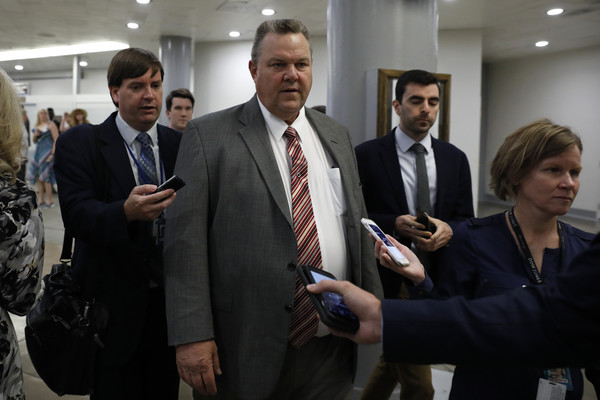
U.S. Senator Jon Tester and Missoula City Mayor John Engen, for example, have both experienced drastic changes in their personal and professional lives while leading the people of Montana through the COVID-19 pandemic.
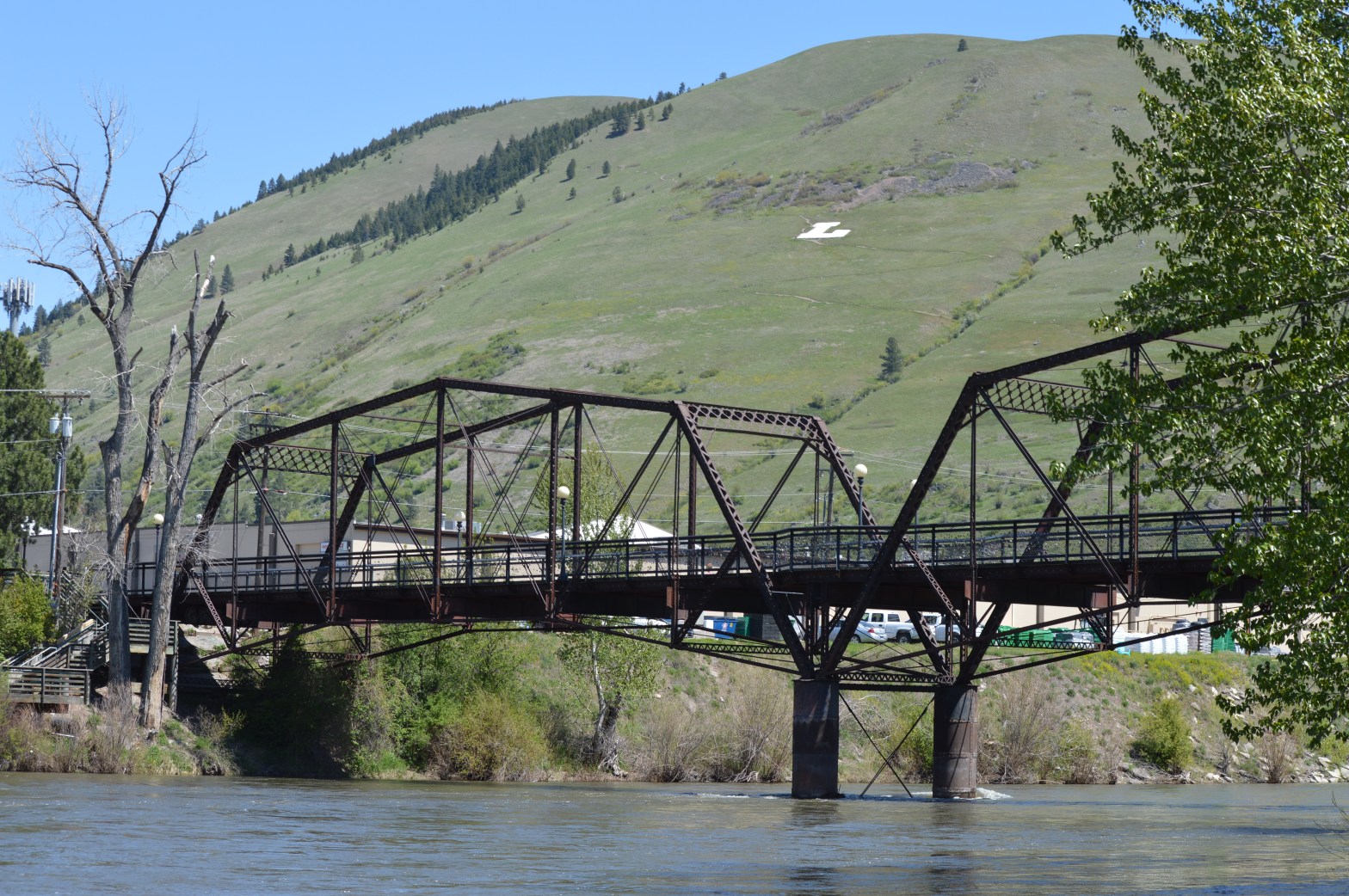
Missoula, Montana has an estimated population of 75,000 people in 30 square miles. It is significantly less dense than other cites of either similar size or population, with “a little more elbow room,” according to Engen. These differences will also change how COVID-19 impacts the community here, but nobody is quite sure what that will look like.
As of April 5, Missoula County has 23 confirmed cases of COVID-19 and one related death, according to the city-county health department.
Gov. Steve Bullock has taken action to ensure the safety of Montanans and try to slow the spread of COVID-19. Within two weeks, Bullock declared a state of emergency, shut down schools and non-essential businesses, issued a stay-at-home order, and suspended evictions and utility shut-offs.
Alongside these actions, Engen said Missoula officials “hit the ground running” in February, once the outbreak in Seattle was relayed to their office. The city-county health department then immediately created an incident team to begin interventions for Missoula.
Engen has been meeting twice a day collectively with multiple local offices, including members of the Missoula City Council, Missoula County Commissioners, the University of Montana, Missoula County Public Schools, the Incident Command Team, the Emergency Operations Center and the Missoula County Superintendent of the Schools.
By doing this, the officials hope “to compare notes, communicate, solve problems collectively, identify issues that are emergent that day, and also plan for the long term,” Engen said.
Tester said he has also seen an increase in virtual meetings and conferences. “I think I’ve had four conference calls today,” he said during a recent livestream. “… We’ve talked about different issues impacting the country as it applies to the coronavirus.”
These meetings are particularly challenging as social-distancing and work-from-home orders prevent teams from meeting in person.
According to Engen, over 600 city employees are currently working from home in compliance with social-distancing guidelines.
“City hall is a ghost town today,” he said. Engen’s staff is part of those working remotely, so he is the only one coming into the office in an attempt to run online conferences and remain available to his colleagues.
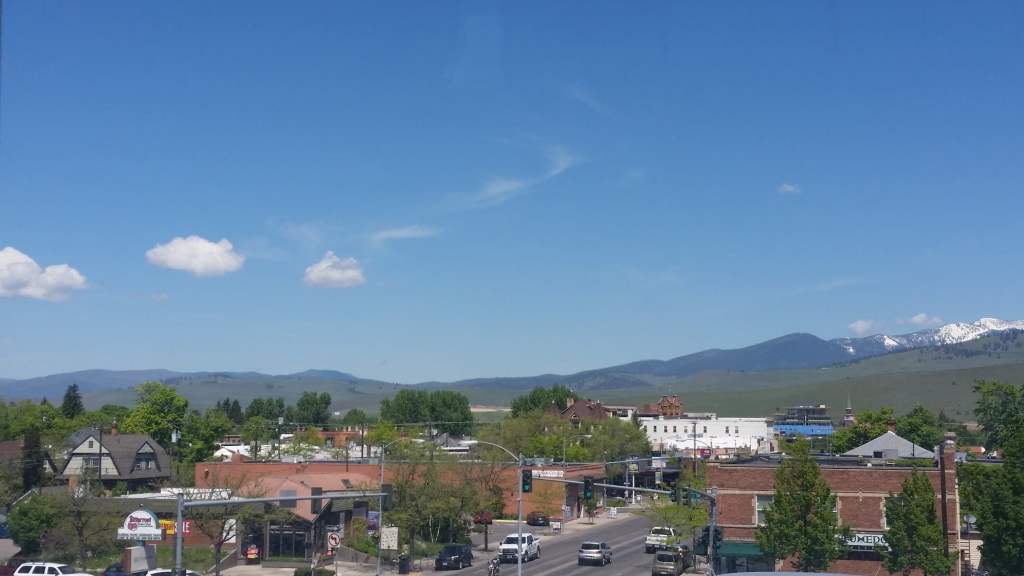
In Washington D.C., the Hart Senate Office Building is typically bustling with activity as people run to appointments and meetings to keep the country running, but with the coronavirus outbreak “you won’t see a soul,” Tester said. “Normally all these offices would be full of people. There’d be people running around everywhere.”
Tester has been working hard with the Senate, passing emergency laws and relief bills in an attempt to ease the burdens of this crisis, but his personal staff is working remotely, with phone calls being forwarded to personal cell phones. Questions and comments are still being taken, but the structure is just different, he says. “That’s the whole idea, serve the people of Montana, but do it in a safe way.”
For Tester and Engen, they said their daily routines have been upended due to COVID-19.
“Normally I’ve got a suit and tie on, but today I’ve got casual clothes on,” said Tester. “We were in a different world a week ago today.”
He also discussed the psychological changes facing this pandemic, saying, “The uncertainty of this, it causes more anxiety than anything else.”
Engen said he felt similarly, saying: “This is a challenge that isn’t finite, it doesn’t follow a schedule. We’re dealing with many variables beyond our control and that’s tough.”
Engen said that his position as the mayor of Missoula is “a position of tremendous responsibility and very little control.” The wellbeing of the city is dependent on the judgments and actions of the citizens, according to him, and he can only communicate what people should ideally be doing.
In a time of uncertainty, he said, “I need to be a bit of a counselor to the community, a consoler, a voice of relative calm and reason, and I need to advocate at the state and federal level for our community as well.”
Engen said he is changing his behavior to try to keep others safe and spends his time checking in on loved ones.
“I used to each lunch out with friends, colleagues, residents, business folks just about every day. That hasn’t happened for quite a while now,” he said. “I’m doing my best to model and follow guidelines.”
Tester’s best recommendations for the people of Montana are to comply with social distancing and keep washing their hands. He also said that if you feel sick, you need to contact your doctor and follow their instructions exactly.
“I think it’s time to listen to science, and learn from science, and listen to those healthcare professionals,” he said. “That’s how we’re gonna move forward.”
Engen had similar advice.
“Pay attention to social distancing, if you feel sick, contact your healthcare provider and get screened for COVID,” he said. “And wash the hell out of your hands!”
Black Lives Matter: What to do when the story is ongoing, but the “trend” is over
This is a digital magazine story, flip through the file here: https://online.flippingbook.com/view/425857102/
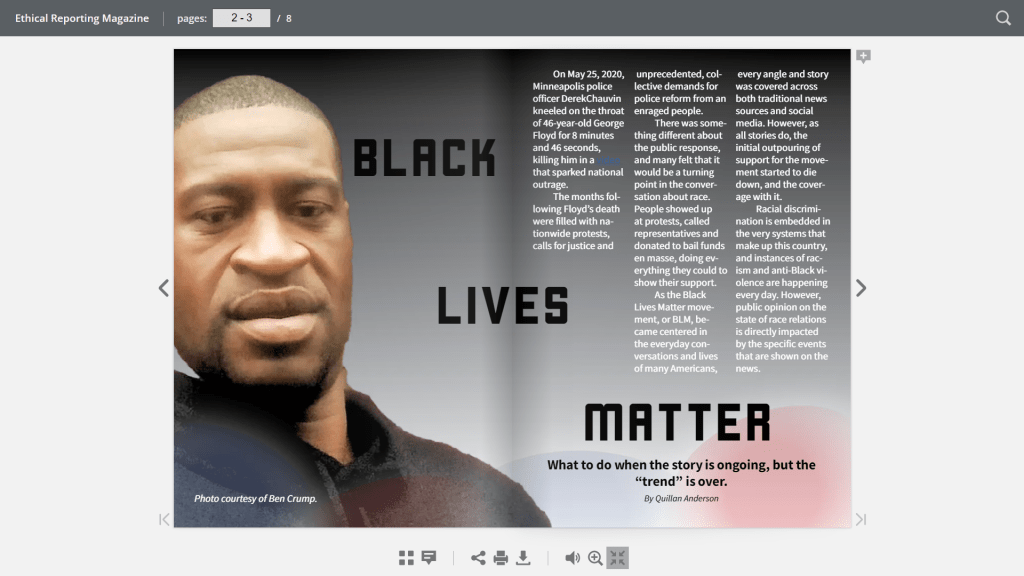
Plaintext:
On May 25, 2020, Minneapolis police officer Derek Chauvin kneeled on the throat of 46-year-old George Floyd for 8 minutes and 46 seconds, killing him in a video that sparked national outrage.
The months following Floyd’s death were filled with nationwide protests, calls for justice and unprecedented, collective demands for police reform from an enraged people. There was something different about the public response, and many felt that it would be a turning point in the conversation about race. People showed up at protests, called representatives and donated to bail funds en masse, doing everything they could to show their support.
As the Black Lives Matter movement, or BLM, became centered in the everyday conversations and lives of many Americans, every angle and story was covered across both traditional news sources and social media. However, as all stories do, the initial outpouring of support for the movement started to die down, and the coverage with it.
Racial discrimination is embedded in the very systems that make up this country, and instances of racism and anti-Black violence are happening every day. However, public opinion on the state of race relations is directly impacted by the specific events that are shown on the news.

A survey by Civiqs shows that the biggest changes in public opinion on race relations happen directly after large, notable events that typically had extensive news coverage. The Charlottesville rally marks the first point since January 2017 that Americans thought race relations were “getting worse.” The most prominent show of that same opinion is in 2020, directly following the murders of Breonna Taylor, Ahmaud Arbery and George Floyd.
As BLM made headlines, each article and broadcast formed the public opinion surrounding racial tensions in the United States. Support for the movement peaked amongst American adults in the days after George Floyd’s death and reflected the coverage the story was receiving on the news and social media.

In a study conducted June 4-10, 2020, around the same time that the Civiqs survey documented the peak in support for BLM, a Pew Research Center survey showed that 84% of Americans were following the George Floyd protests either “very” or “fairly closely.” The study also found that 37% of U.S. adults were talking about the protests “almost all” or “most” of the time, and another 48% were “sometimes” discussing it.
However, there is a significant difference in public opinion when the responses are sorted by race.
While Black, Hispanic/Latino, and other people of color have consistently and majorly supported BLM, all increasing in the aftermath of George Floyd’s death, early June is the only time that a majority of white people in the United States supported the movement at all.
 Black Americans consistently remain around 76% in net support of BLM |  Other races remain around 13% in net support of BLM, peaking at 60% in June 2020 |
 Hispanic/Latinos remain around 26% in net support of BLM, peaking at 68% in June 2020 |  White Americans remain around -17% in net support of BLM, peaking at 7% in June 2020 |
“The unfortunate reality is that most white Americans are personally not directly impacted by racism,” said Mark Warren, a sociologist at the University of Massachusetts Boston and author of “Fire in the Heart: How White Activists Embrace Racial Justice. “We still live in a very segregated society, so it’s easier for white people to just become passive or accepting of the situation without the sense of the urgency of it.”
While the number of annual police killings, specifically shootings, has remained the same since 2015, media coverage of these instances has fluctuated again and again.
According to a FiveThirtyEight analysis of cable news broadcasts and online news headlines, the phrase “Black Lives Matter” appeared less than half as frequently between 2017-2019 as in 2014-2016.

Journalism is a field that lies between public service and entertainment; newsrooms often have to balance timeliness with accuracy, engagement with importance and profitability with integrity. Journalists have historically served as gatekeepers of knowledge and while they do not tell their audience what to think, they do have control over which stories the public knows.
Comprehensive media coverage is important to avoid what journalist and author Caleb Gayle called “wholesale forgetting,” where vital information about history or current events is effectively lost due to a lack of accurate reporting.
Gayle referenced the Tulsa Race Massacre of 1921 as an instance where history was nearly forgotten and credited Mary E. Jones Parrish as being essential to our remembrance and understanding of it.
The massacre took place in Tulsa, OK, where a white mob burned down the Greenwood District, also known as “Black Wall Street.” Historians believe as many as 300 people died and more than 800 were treated for injuries. 35 city blocks were destroyed including churches, schools, businesses, a hospital, a library and as many as 1,256 homes.
Unfortunately, much of the news coverage at the time granted primacy to the Mayor and other officials, taking their statements as fact without further investigation.
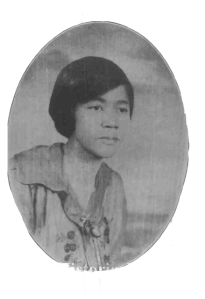
Instead, Parrish, who was a teacher and journalist in Tulsa, went around on her own and talked to residents, took in witness statements and assessed the value of buildings that were burned after the event. She later documented as much of her and others’ experiences as possible in her books “Race Riot 1921: Events of the Tulsa Disaster” and “The Nation Must Awake: My Witness to the Tulsa Race Massacre of 1921.” If it weren’t for her careful documentation, it is unlikely history would so vividly remember the massacre at all, let alone accurately.
In this way, it is clear that media coverage and other methods of spreading awareness can have an astonishing impact on what the public understands and believes.
Protests and media coverage can either go hand-in-hand or be diametrically opposed. News coverage can help to spread the message of a protest or event – without necessarily determining if that message is right or wrong – or misrepresent it completely. When protests and media coverage are in sync and things run smoothly, the protesters meet their goal of getting attention on the issue and reporters meet their goal of fairly and accurately informing the public. When they are out of sync and seemingly misunderstand each other, the situation can become volatile and inflammatory. Nevertheless, they nearly always affect each other. If protests are being reported on, more people either support or oppose them making them a much bigger topic, the bigger a protest is the more coverage it receives, and so on.
The statement “Black Lives Matter” is not a debate. Human rights are not something to be argued. Journalists need to avoid false equivalencies or a blind commitment to neutrality. They need to continue to amplify the voices of those they have historically considered voiceless.
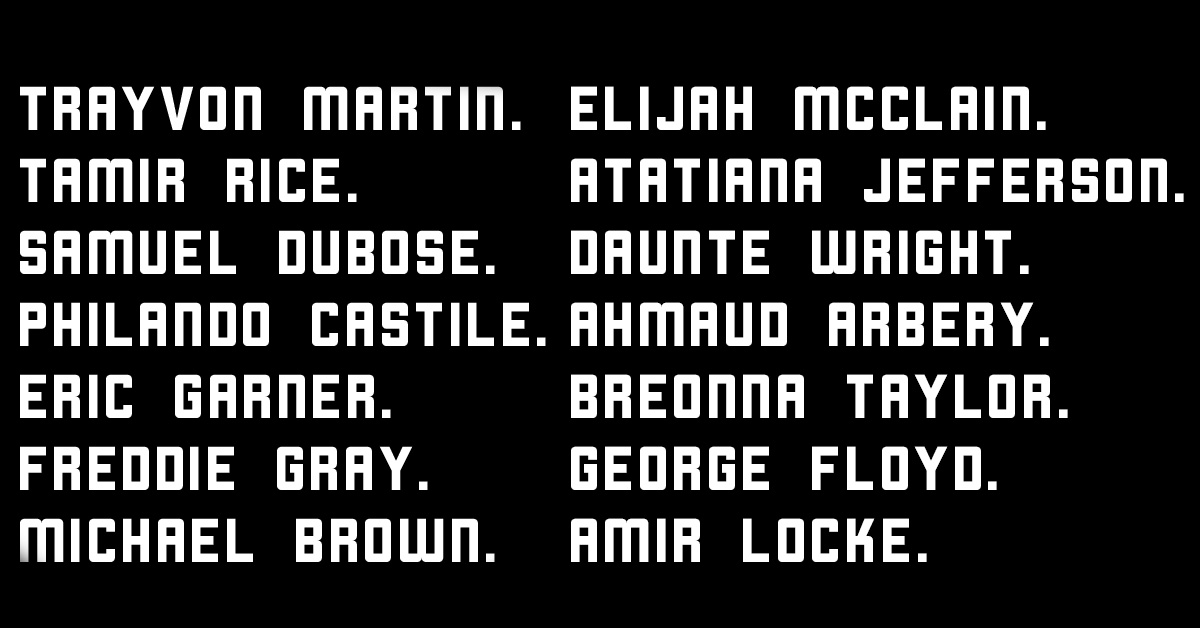
We must say their names:
Trayvon Martin.
Tamir Rice.
Samuel DuBose.
Philando Castile.
Eric Garner.
Freddie Gray.
Michael Brown.
Elijah McClain.
Atatiana Jefferson.
Daunte Wright.
Ahmaud Arbery.
Breonna Taylor.
George Floyd.
Amir Locke.
JRNL 3610 Introduction

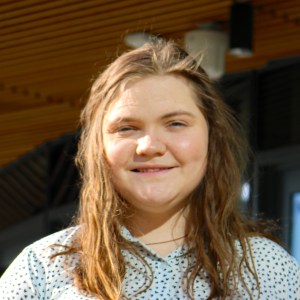
My name is Quillan Anderson and I am a third-year undergraduate journalism and political science student at Northeastern concurrently pursuing an M.S. in Media Advocacy.
My focus is on covering social issues, particularly stories that are undervalued and underrepresented. “My favorite projects include a story about an individual’s encounter with police brutality, a choir composed of and supporting disenfranchised women, environmental justice communities in Massachusetts and internet accessibility for Indigenous people in Montana.”
In this class, I am hoping to learn more about the different mediums journalism can use. I personally am more interested in multimedia work and exploration than traditional reporting and look forward to exploring more of the options I have career-wise. I am also excited to learn more about how to use social media for journalism, all of my experience thus far has been under the lens of marketing and communications.
Living in Boston has created conflicting emotions in me. On the one hand, living in a city of this size is new to me, and the lights, activities and opportunities still dazzle me after nearly three years here. I love going to concerts, shows and museums, I love the quality of education I get, the jobs I can have and I love the friends and community I have found living in a place that is much more diverse and open-minded than my hometown.
There are many downsides, however, ranging from annoyances like the sounds of traffic and construction or the lack of nature, to institutional, systemic issues such as how history is treated in this city. I find that while there is a rich history in Boston, a statement I doubt would be contested by many, that history is limited and suppressed, often willfully ignoring many of the atrocities that happened along the way. The concept of “history” in the United States tends to be extraordinarily whitewashed and colonial. In Boston, people seem to often focus on the victories of the colonies against the British empire without acknowledging that this land was not theirs and, in the modern-day, tout openness and diversity while gentrifying and over-policing communities of color.
An Act for Justice
Protecting Massachusetts’s most vulnerable communities
Transcript:
[PACHECO:] “When you think about environmental justice communities, they’re communities that, for generations that have not had the focus on them… we as a society have not really taken as seriously as we should have.”
[BRACA:] “We knew that it was really all about the money and not about actually filling anybody’s needs.”
[BELECHE:] “It does say, you know, whether somebody cares about you or doesn’t care about you.”
[WALLACE:] “It can be a lot of smoke and mirrors… so I think it is up to legislation to be put in to protect these communities”
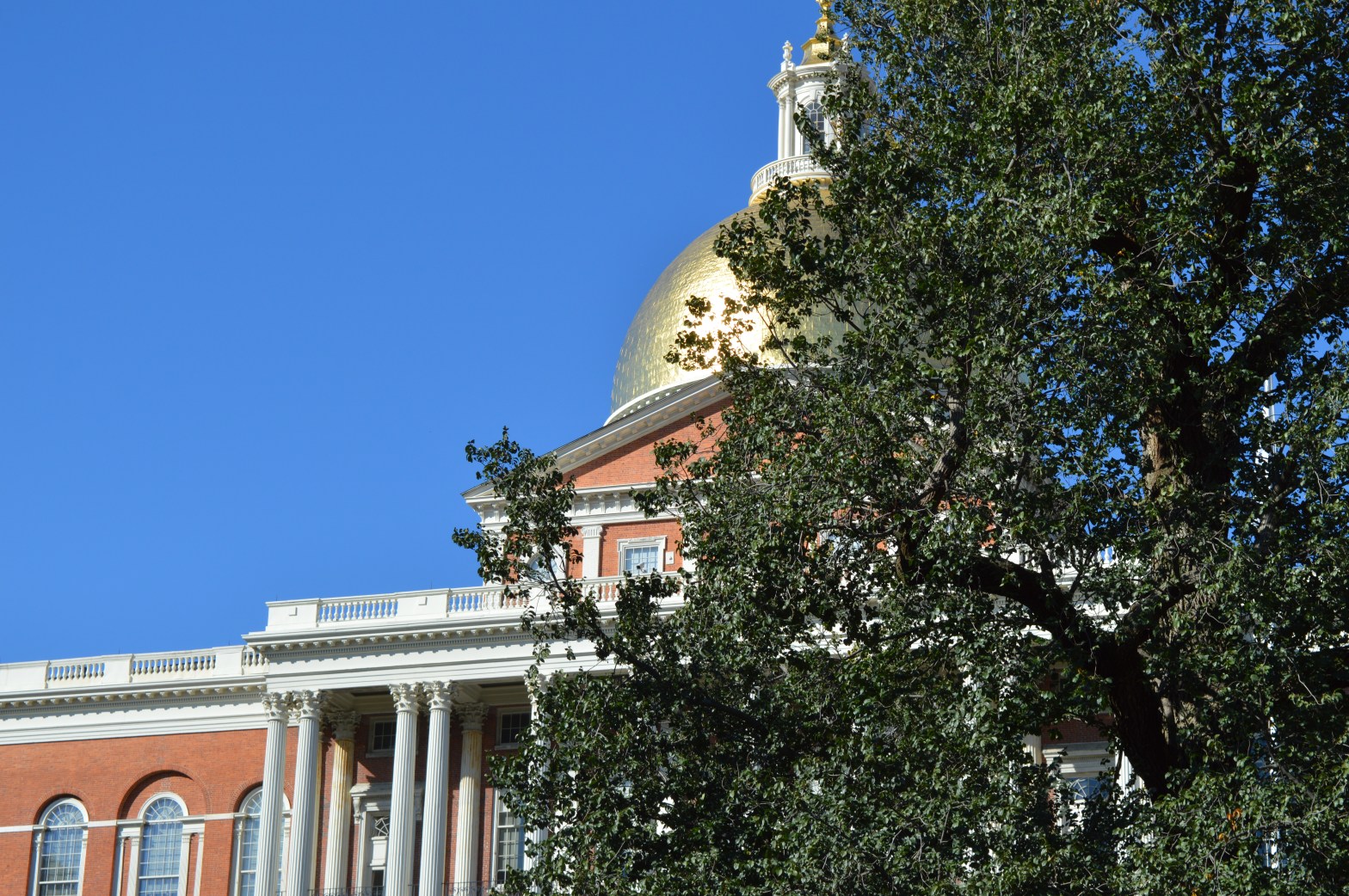
Environmental justice communities exist all throughout Massachusetts, in both urban and rural areas. Earlier this year, on March 26, Governor Charlie Baker signed new climate change legislation for the state: a bill titled “An Act Creating a Next Generation Roadmap for Massachusetts Climate Policy.” This bill recognizes the significant impact of climate change on environmental justice communities and expands protections on these vulnerable communities from big corporations that are looking to exploit them.
[PACHECO:] “Now we can actually look at environmental justice and see whether or not environmental justice is an area that the city needs to pay attention to. People, for example, that had homes that were white, that would have to periodically have to go and spray down the outside of their house… that’s how bad the air quality was in that area.”
In Saugus, the state’s oldest incinerator sits on a conservation area and both the water and air pollution have affected the surrounding communities since the 1970s. Many residents suspect that it has significantly contributed to high cancer rates and other health and environmental issues.
In the Boston neighborhood of Roxbury, government negligence, and a general lack of support, have left residents feeling alone and abandoned by those meant to serve them.
[BELECHE:] “There’s a whole history of the neighborhood organizing back in the 80s and 90s still about the impact of having trash transfer centers right in your backyard… there were days where you can smell it, you could smell the trash being sort of stored and handled not that far from where I live. Language barriers, technology barriers, literacy barriers, all of that compounds in how you participate in civic life.”
Despite these issues, groups like South Coast Neighbors United have been advocating for improvement, and hope that this bill is a step in the right direction.
[BRACA:] “There are stipulations in there, provisions in there that are stronger towards the protection of environmental justice communities, so once it’s enforced and enacted and clarified so that all those communities know what those parameters are, companies like Parallel and Eversource, they’re not gonna be able to just come right in, slip through the back door and get things rubber-stamped as easily as they have in the past. They’re not gonna be able to continue to exploit communities that really just can’t afford any more pollution.”
[WALLACE:] “Hopefully this bill will really be the impetus to get all these offices to now come back, and protect communities.”
[PACHECO:] “The legislation is historic and as much that we’re dealing with the environmental justice issue, when we actually recognize it and name it and put it in a bill, it sends a message out to everyone that this is something that’s important and must be paid attention to”
[BELECHE:] “It’s important to certainly create opportunities and provide resources to the younger generation. Environmental justice is not just about the environment it’s not just about health. It’s about education, it’s about having access to resources… People showed you that they truly believed you were a full person, not a second-class citizen.”
This legislation shows the need for action in facing climate change in Massachusetts. In towns like Saugus, inaction is disastrous to the wellbeing of these vulnerable populations.
[BRACA:] “This is a great start, but it’s just a start and we’re going to be watching it and make sure that it actually is implemented and enforced.”
Thanks to Senator Marc Pacheco, Wendy Braca and Tracy Wallace of South Coast Neighbors United, and Marcos Beleche of El Jardin De La Amistad
NOTE: The community garden in Nubian Square is called El Jardin De La Amistad
Andrew Ryan: Covering local government
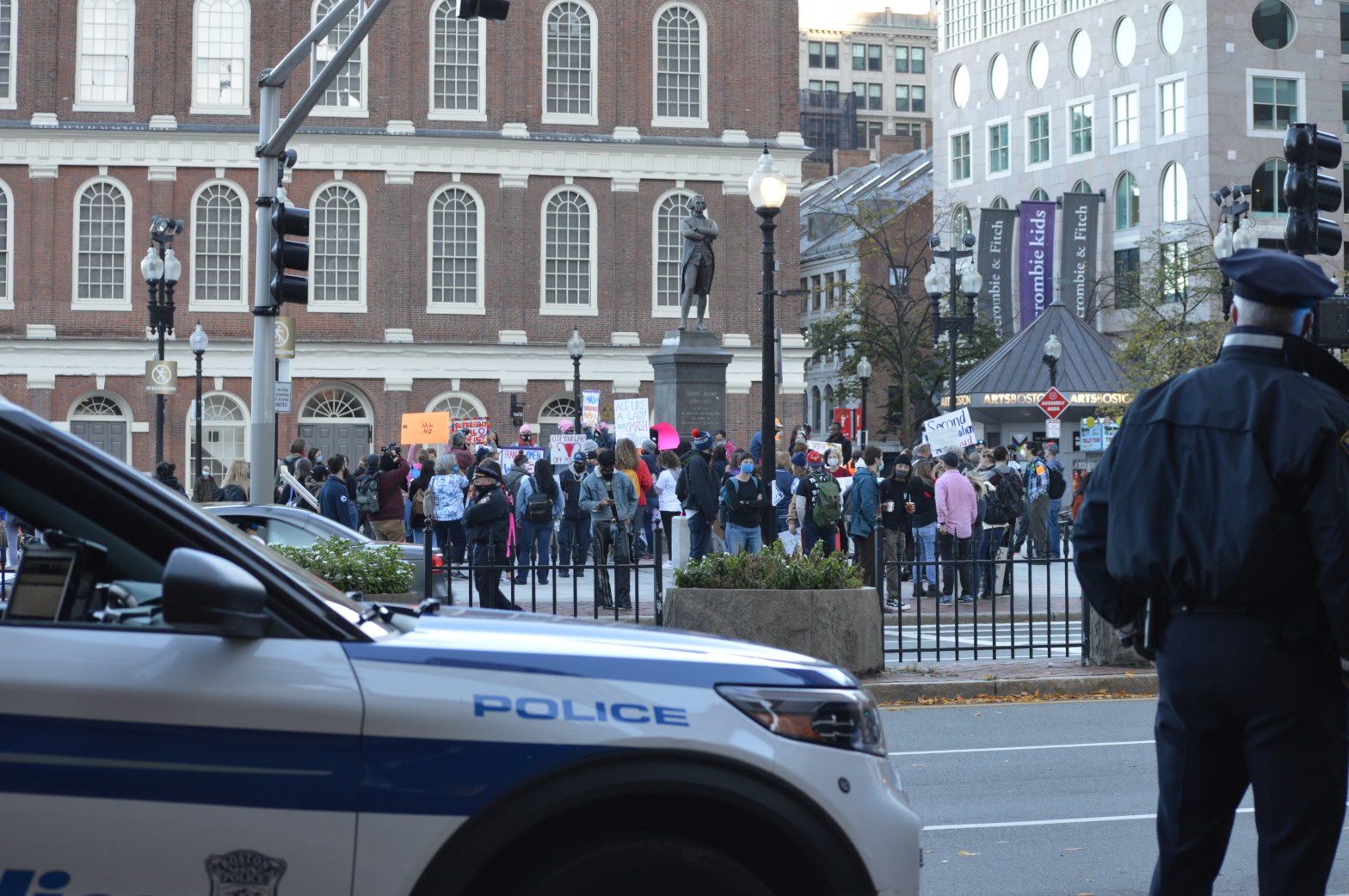
“City government is the layer of government that has the most impact on people,” said Andrew Ryan, a member of the Boston Globe’s investigative reporting team, Spotlight. Ryan spoke to a class of Northeastern journalism students on Oct. 26 about his time and experiences as a beat reporter at Boston City Hall.
Ryan started at the Globe in 2006 as a breaking news reporter. Four years later, in 2010, he became City Hall bureau chief and covered the final term of former Mayor Thomas Menino and the first term of Mayor Martin Walsh before moving onto investigative reporting.

While he had the title of bureau chief, Ryan said “there was a bureau of one, which was me. It was good for me, [but] kind of bad for democracy,” especially because the Globe was the only newsroom there. He discussed the importance of people being aware of what was happening in their local government and how it was his job at the time to keep the public well-informed.
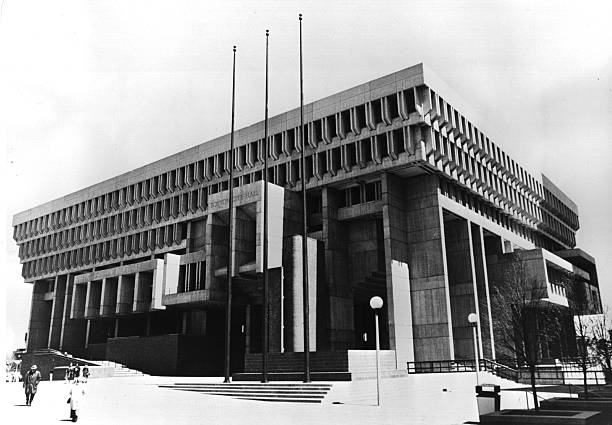
City Hall is an “ugly, oppressive-feeling building,” he said. “As a beat, it could be kind of brutal, literally.”
While covering Menino’s last term, Ryan said that there was continuous messaging to make the mayor look good. “Generally in City Hall, there was one person that mattered and that was the mayor,” he said. “Everyone tried to give [him] credit for everything.”
He recounted talking to a young staffer about an app they had developed, but they had given credit to Manino, who didn’t even have a computer on his desk, according to Ryan. He said that everyone working to make Menino look good meant that they weren’t always transparent and it made covering the inner workings of City Hall hard.
Being directed to only write stories about one person could be monotonous and make a beat particularly difficult, but Ryan sought out new sources and stories.
He said that one way to keep a beat interesting is to follow your curiosity and let seemingly unimportant information lead to unique stories. Ryan talked about a story he wrote about the man in charge of operating the bell above Faneuil Hall, which he did so from across the street with a little remote control. He expressed how fun that story was for him and how those pieces can become a favorite of beat reporters.
Ryan kept in touch with the man for the rest of his time as City Hall bureau chief and could often get more context on his more serious or important stories from the people he got to know through these lighthearted pieces. “The more people you meet, the more people you have for context, the better,” said Ryan.
Throughout his time at the Globe, Ryan has centered his work around local government and keeping public officials accountable. His work as an investigative journalist reflects his time and work as a beat reporter for Boston City Hall.
While on the Spotlight team, Ryan has primarily contributed to stories surrounding the accountability of local officials, including politicians, police officers, and other important public figures.

Two notable pieces he’s done while on the Spotlight team include “68 Blocks,” a series about the Bowdoin-Geneva neighborhood in Dorchester that won the Online News Association’s Knight Award for Public Service and an investigative series and podcast on Aaron Hernandez, a former NFL player convicted of first-degree murder.
Recently, Ryan’s stories have focused on police departments and local officials. Ryan started a series entitled “Behind the Shield: Inside the Boston Police Department” talking about racial disparities inside of police stations. In the first installment of the series, Ryan and his cowriter Evan Allen reveal that racial inequities run deep within the Boston Police Department, based off of the Boston Globe’s analysis of police data. Their analysis demonstrates that white officers are less likely to face punishment and more likely to receive awards and promotions than their Black counterparts.
From breaking news, a City Hall beat, and finally investigative reporting, Ryan has always been engaged in covering local politics to help people understand the things impacting their day to day lives.
2020 Boston Women’s March: Standing together in the march against injustice
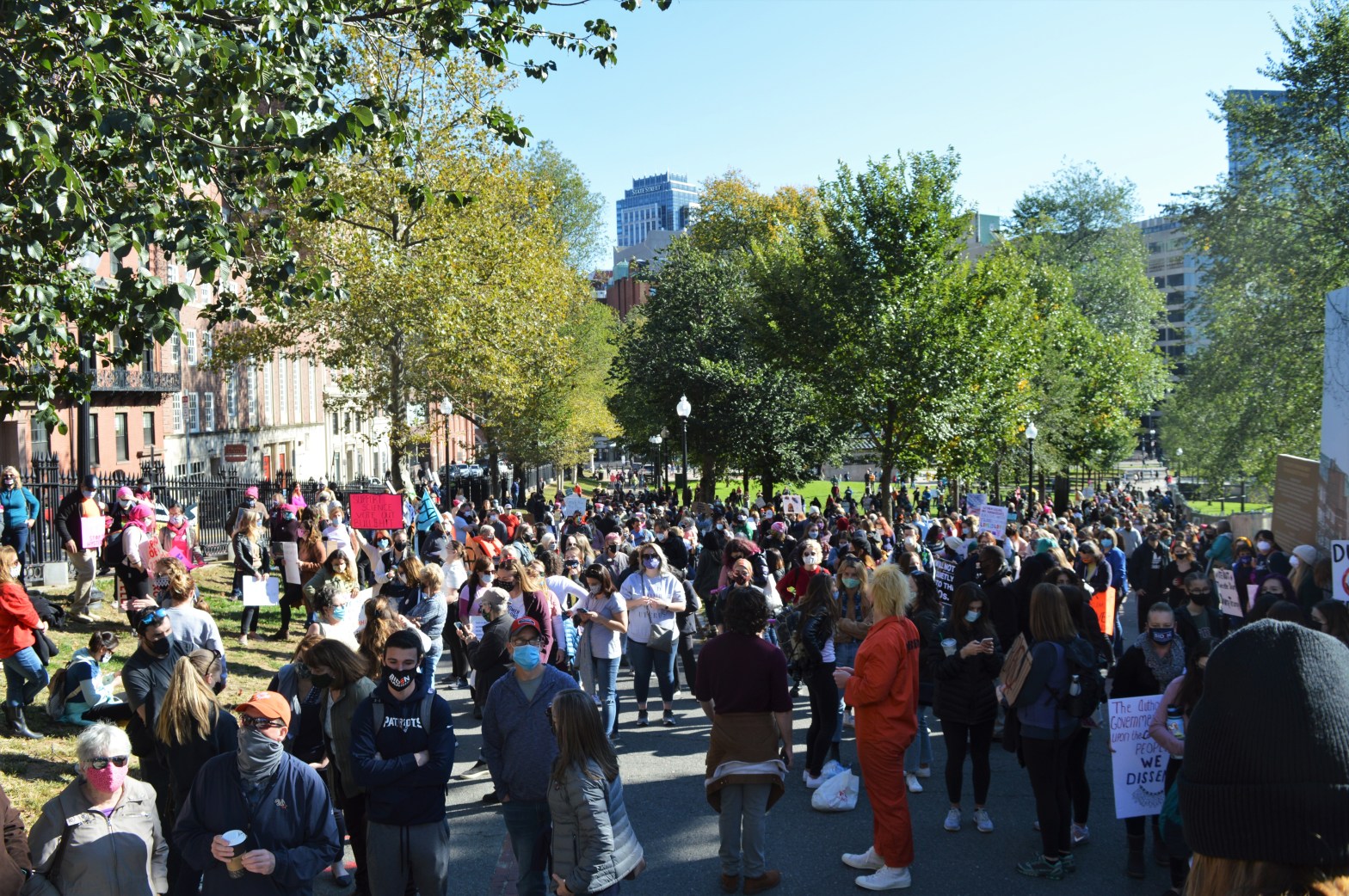
Angry, impassioned and hopeful, thousands of people gathered across the country on Saturday, Oct. 17 for the annual Women’s March.
In Boston, Siobhan Reidy, a political science student at the University of Massachusetts Amherst, organized hundreds of people to meet on the steps of Boston Common in support of women’s rights. “This is our fight. This is our country. This is our chance,” she said, prompting a wave of cheers from attendees.

This year’s march focused highly on voter turnout and how the 2020 election will impact the lives of all Americans for years to come.
Michelle Wu, a Boston City Councilor and candidate for Mayor, told demonstrators that Black lives, reproductive rights, LGBT rights, and public health were some of the most important issues that people will be voting for on Nov. 3. “It’s exhausting thinking about how much is on the ballot,” she said.
This sentiment was echoed by Reidy in an interview. “Reproductive rights are on the line. Marriage equality is on the line. The lives of Black, Indigenous, and people of color, their lives are on the line, their rights are on the line,” she said. “The environment is on the line … another four years of Trump means that there’s another four years that will go by where we’re just harming the planet.”
Another major concern of attendees was the nomination of Amy Coney Barrett to the Supreme Court, in which she would assume the seat of the late Justice Ruth Bader Ginsburg.
Justice Ginsburg, lovingly known as RBG, expressed her dying wish to her granddaughter, Clara Spera, in the days before her death. “My most fervent wish is that I will not be replaced until a new president is installed,” she said, as reported by NPR.
Critics of President Donald Trump’s decision to move forward feel as if he is disrespecting RBG’s dying wish. Jess, a 26-year-old Boston healthcare worker attending the march, said that there was a lot of hypocrisy surrounding the nomination of Barrett. “The Supreme Court is being essentially stolen,” she said. Women’s March organizers said that they demanded that “the memory and legacy of Justice Ginsburg’s lifelong fight for equal rights is properly honored by fulfilling her final wish that the nomination of her replacement is delayed until after election day.”

Many are also worried about the implications of Barrett being elected to the Supreme Court. “The fear is that, regardless of what she said during the nomination hearings, her history shows that Roe v. Wade will be a target,” Reidy said. “A heavily conservative bench means that … Roe v. Wade will go, Obergefell v. Hodges will go, the [Affordable Care Act] will go. Everything that we all love, everything that’s keeping Americans safe and equal will disappear.”
Multiple speakers inspired the crowd with their stories of political activism and calls for action. “Four years ago, I was an angry citizen of this state, and I used that anger to form the Women’s Party,” said state Rep. Lindsay Sabadosa.
Days after the 2016 election, Sabadosa, who did not hold public office at the time, organized approximately seven busloads of people to travel to Washington, D.C., to join the march and protest Trump’s election. She then ran for state office in 2019, winning the race to represent the 1st Hampshire district in the Massachusetts State House.
“[Trump] promised he was going to attack Roe v. Wade. Mission accomplished. He promised to attack healthcare. Well, here we are, in the middle of a global pandemic with the ACA under attack again,” said Sabadosa. “I thought his presidency was going to be bad. But I did not realize the extent to which he would use that office to wage war on the American people.”
22-year-old Toiell Washington, co-founder of Black Boston, urged people to support all Black women, regardless of occupation, criminal history, attractiveness, or countenance. She then led the crowd through a call and response, having them loudly repeat “I will protect Black women. I will support women. I will believe Black women.”

“Feminism without intersectionality is white supremacism,” she said. “When we march today, keep intersectionality in the back of your mind.”
Hundreds of demonstrators looped around Boston Common alongside people cheering in their cars before continuing on to Boston City Hall.
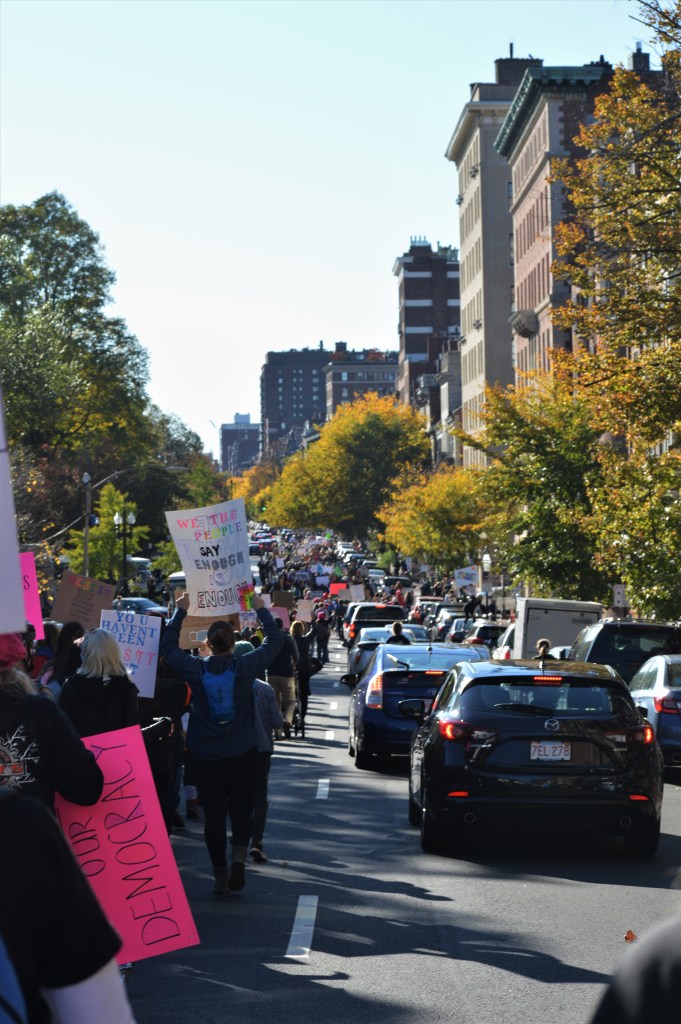
The march continues on Beacon Street around Boston Common Demonstrators gather outside Faneuil Hall

“It felt like people who couldn’t make it here or didn’t think to go, or maybe didn’t really feel it was important to go, were still voicing their opinion and standing with us, which was just really empowering and supportive,” said Reidy. She said that “having that moment where everyone is so supportive and coming together” to chant and dance outside of Faneuil Hall was one of the most impactful moments of the march for her, but reemphasized the need to vote.
“This is the election of our lifetime, for our lives. The importance of voting cannot be overstated,” she said. “Even in a state that, like Massachusetts, feels like it’s safe because it feels like no matter what it’s going to go blue, that’s not a guarantee. And I think we just need to always, forever, emphasize the absolute need to vote.”
Update: Amy Coney Barret was confirmed as a Supreme Court Justice in a 52-48 Senate vote on Oct. 26.
Why LGBT+ Representation in Media Matters: What does it take to be effective?

“The Half of It,” a movie by Chinese-American screenwriter and director Alice Wu, is set to release on May 1. The movie is the coming-of-age story of Ellie Chu, a Chinese-American teenager and her newfound friend Paul Munsky, both of whom have a crush on a popular girl at their school.
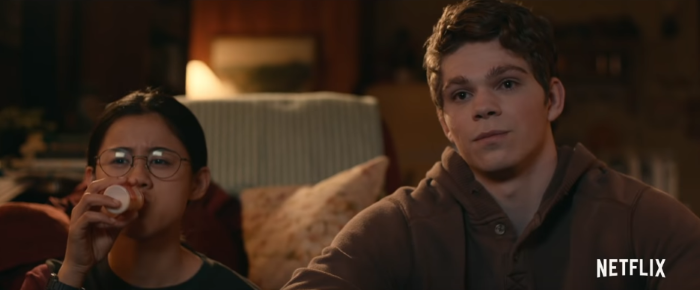
Wu is a self-proclaimed proud lesbian and is best known for her 2004 film “Saving Face” about a Chinese-American lesbian and her mother trying to find self-acceptance.
In a director’s note, Wu discussed the ending of her movies, saying, “I confessed to not knowing if that happy ending could be expected in real life; but as a queer woman, I wanted — needed — to see it in order to believe it could happen for me.”
In saying this, she brings up the importance of representation of LGBT+ characters and stories in media.
So what stories are being told? How? And by who?
While the number of LGBT+ characters in American television shows and films has increased in recent years—with GLAAD reporting 6.4% of characters belonging to this community—a 2018 study by YouGov found that only about 18% of Americans believe there are enough roles for LGBT+ people, lower than any other group.

Perceptions of minorities are impacted by what is shown in popular media. Symbolic annihilation, a term coined by George Gerbner in 1976, is the omission, trivialization, or condemnation of these groups and has been shown to have negative impacts. It hurts the self-perception of LGBT+ people as they don’t see themselves represented in the media they consume.
Media effects researcher Michael Morgan said the visibility of characters from varied backgrounds contributes to people’s self-image.
“When you don’t see people like yourself, the message is: You’re invisible. The message is: You don’t count. And the message is: ‘There’s something wrong with me,’” he said in a statement to the Huffington Post.
The lack of LGBT+ representation in media also contributes to the bigotry of other people through the parasocial contact hypothesis.
In certain groups, many say they don’t know anyone that openly identifies as LGBT+, leaving media to expose them to those identities. According to the parasocial contact hypothesis, when people see the subject of their prejudice and start to understand them through the media, they accept them more.
Wu represented herself with “Saving Face,” which was inspired by her coming out and seeking acceptance from her mother, according to statements with SFGate in 2005.
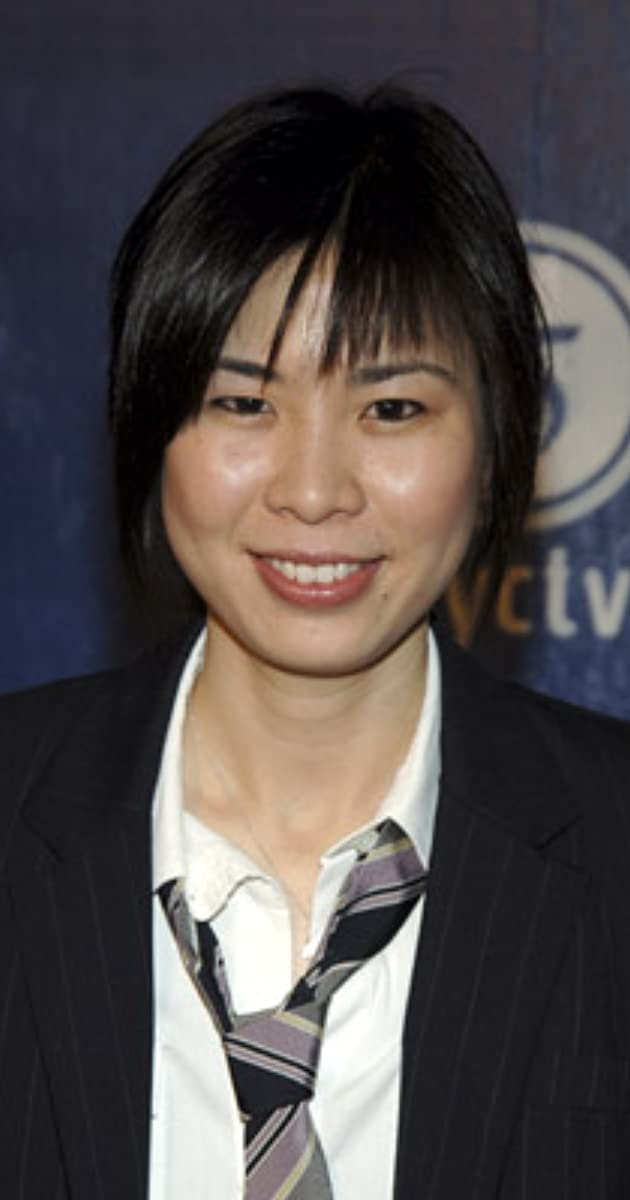
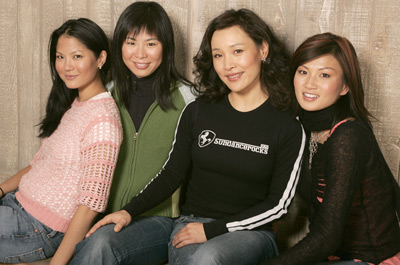
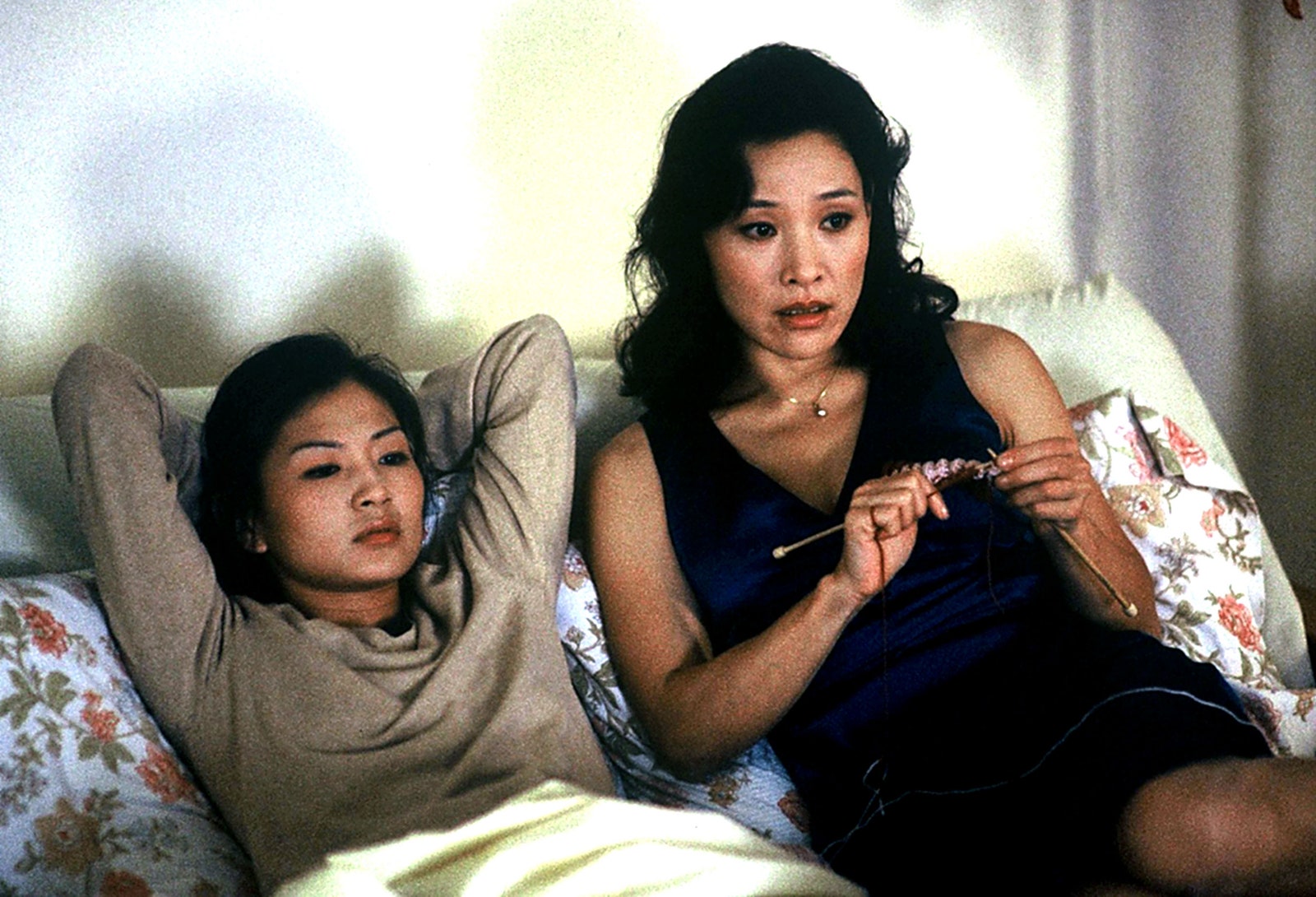
With traditions in Chinese culture, Wu felt as if she would be shunned in her community, a fear which came to life when her mother had stopped contacting Wu for two years.
“Saving Face” focuses on their reunion. “I think she realized I would still be there for her, that I was her daughter no matter what and being gay did not change that,” said Wu.
Wu used her film as a way of healing and the main lesson is that love and understanding are more important than tradition.
While Wu writes based on her own experiences, a vast majority of LGBT+ representation consists of negative or inaccurate portrayals, and these depictions do far more harm than good.
Stereotypes and misconceptions are common for LGBT+ characters in media, such as Brent, a feminine gay man in the movie “G.B.F.,” Adèle in “Blue is the Warmest Colour,” a bisexual girl who cheats on her girlfriend with a man, and Buffalo Bill in “Silence of the Lambs,” a “transsexual” serial killer who gender nonconformance stems from severe mental illness.
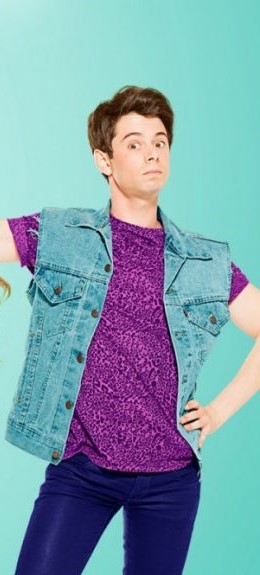
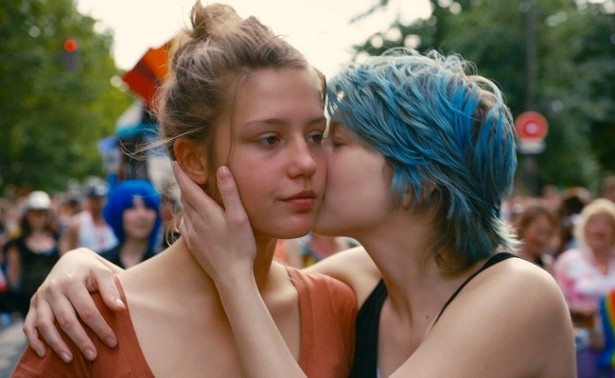
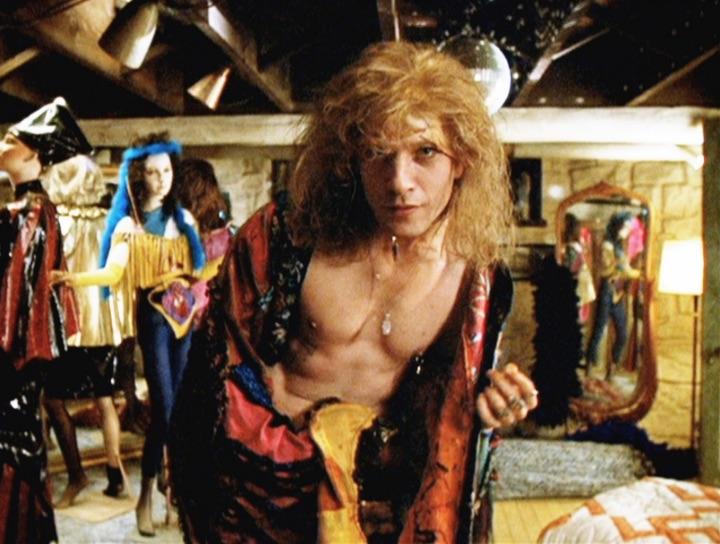
While there are people who fit certain stereotypes, only portraying those characters does not represent the entire community, often leaving characters one-dimensional and ingenuine.
“Queerbaiting” is yet another issue, as directors rely solely on subtext to “represent” LGBT+ identities. Recently J.K. Rowling proclaimed that Albus Dumbledore from the Harry Potter series has been gay all along, despite that never being present in the stories. Not only is this false representation, but it also capitalizes on and ridicules the need to see LBGT+ identities in media. Writers expect LGBT+ people will follow subtle representation and everyone else won’t be offended or claim that anything is being “shoved in their faces.”
There is also a severe lack of intersectionality within LGBT+ representation as only 23% of the 6.4% of LGBT+ characters are non-white, according to GLAAD’s report.
Furthermore, a study by Ana-Isabel Nölke, a graduate student at the University of Edinburgh found that 230 out of 240 intersections of sexuality, class, age, and race are not represented at all.
Alice Wu and “The Half of It” might just be the piece of media to start fixing all of these issues.
As a Chinese-American lesbian writing about Chinese-American lesbians, Wu is creating accurate representations of her identity and shows characters that many don’t see. Because she is part of the community she writes about, Wu writes realistic and nuanced characters that avoid stereotypes and queerbaiting while including intersectional identities.

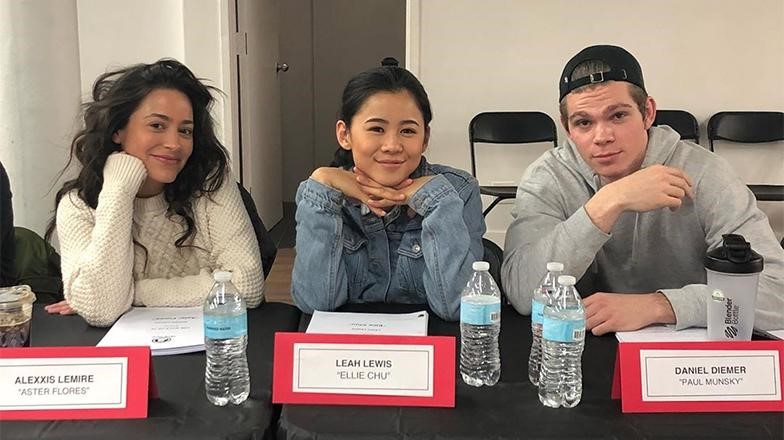
Hollywood needs to include more minority characters, but they need to be done well. Representation is not measured solely in quantity. Portraying relatable and empathetic LGBT+ characters will not only empower LGBT+ people, but it will promote understanding and acceptance from those who might not have anyone to show them that this community is just as human as they are.
Note: None of the images are mine, they were all pulled from online with the sole purpose of being used for this blog post. All credit goes to the original sources.
Michelle Alexander: The Disturbing Bigotry of Mass Incarceration
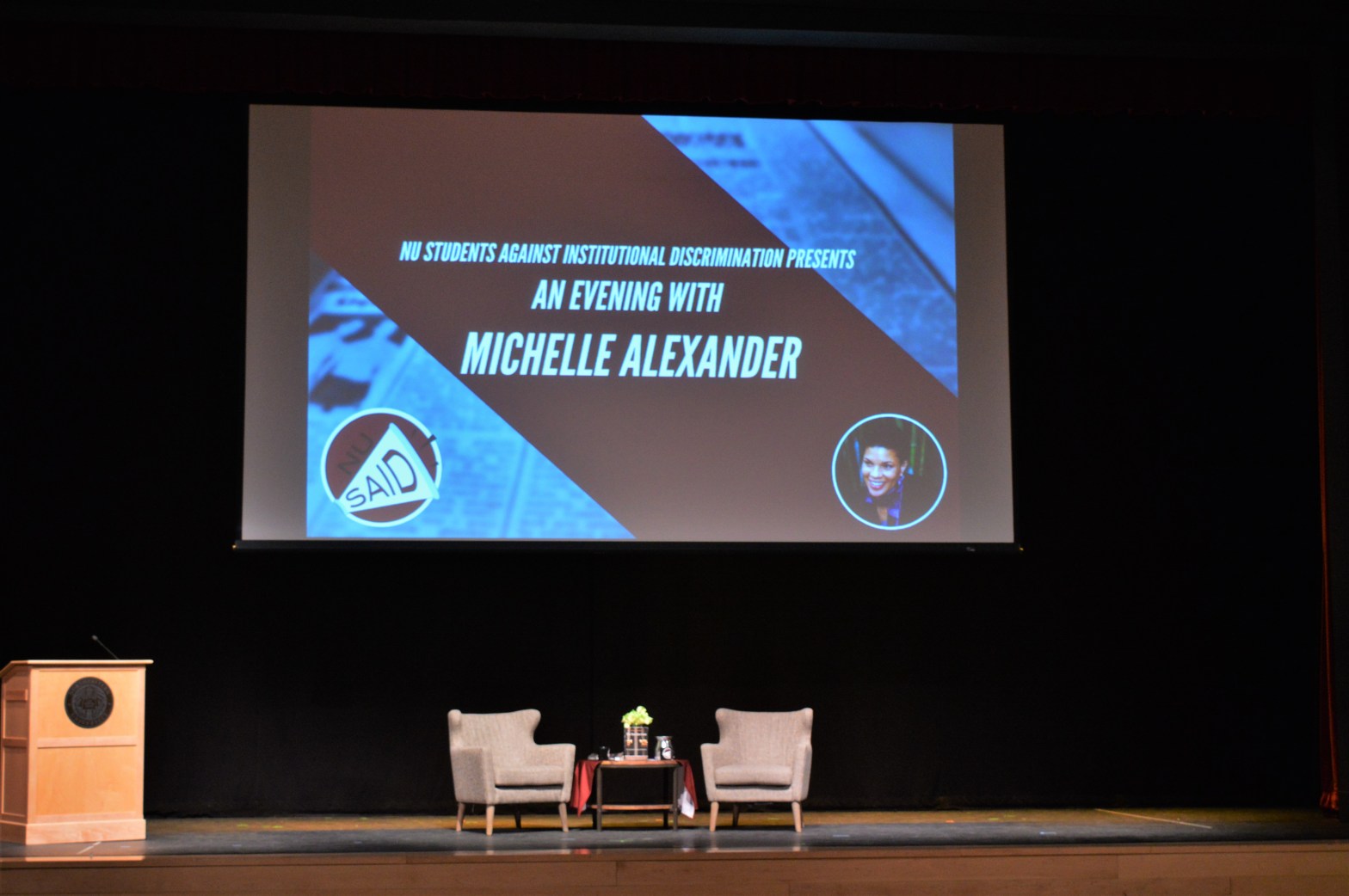
Social justice advocate Michelle Alexander described mass incarceration in the United States as a “legal system of discrimination” specifically targeting young people of color.
“There was a legal regime that was operating,” Alexander said. “With routine stops, frisks, searches, the sweeping of folks into a system before they had even reached adulthood, branding them criminals and felons, and releasing them to a permanent second-class status for life.”
Alexander, best known for her award-winning 2010 book “The New Jim Crow: Mass Incarceration in the Age of Colorblindness,” told students that the war on drugs is a tool of mass incarceration and the impact of drug conviction goes far beyond prison walls.
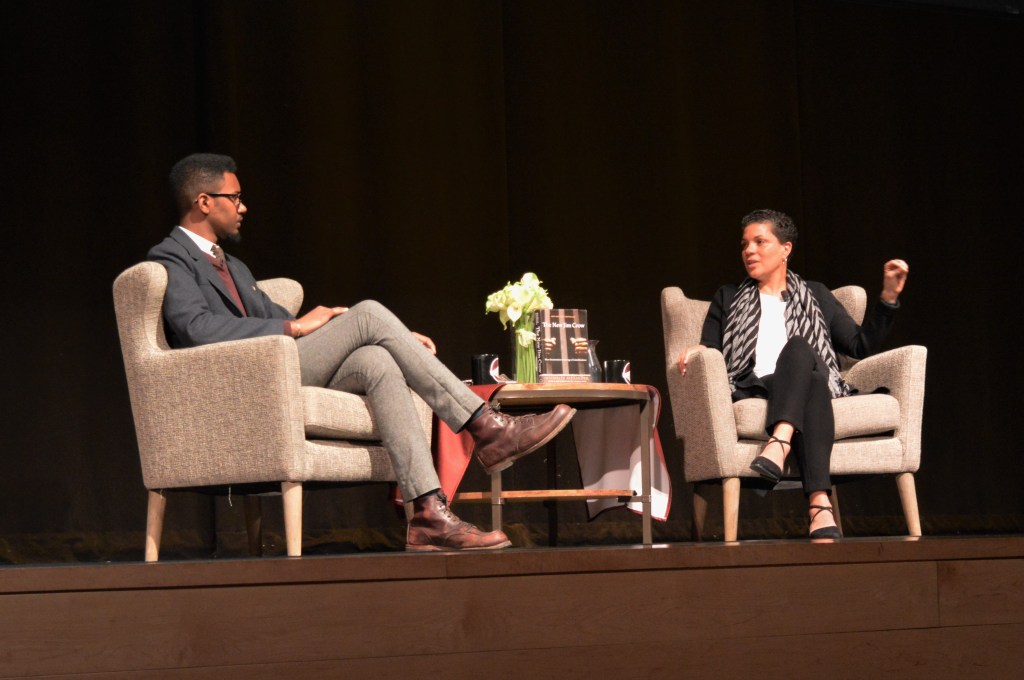
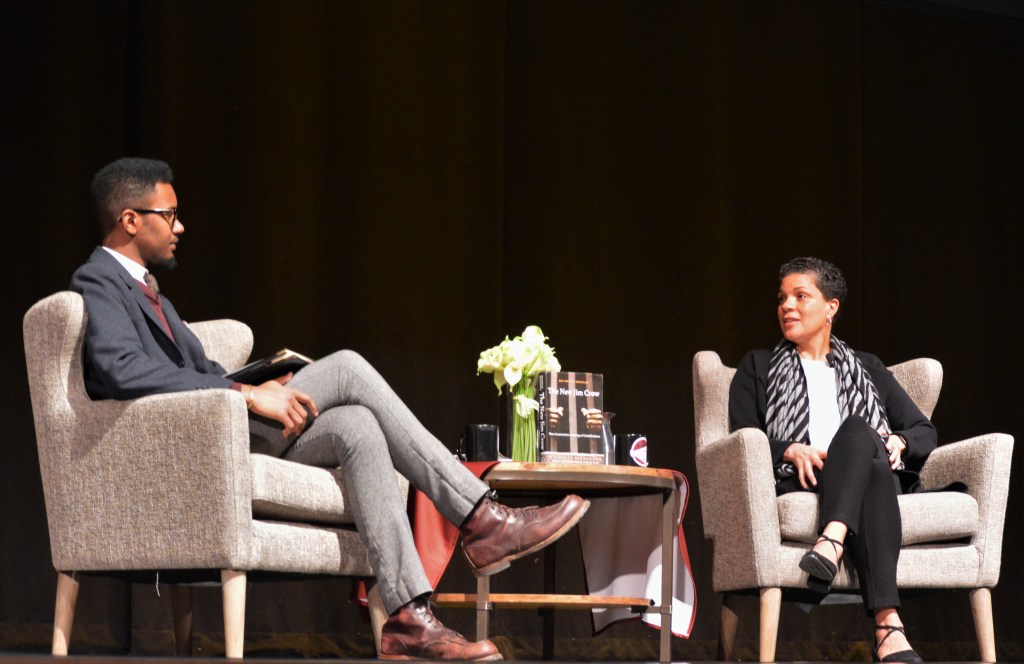
Saying that the majority of arrests in the United States are for non-violent crimes and that the charges often result in felony probation rather than imprisonment, Alexander said, “Whether they spent a day in prison or not, they were stripped of basic rights and relegated to a permanent second-class status.”
As an author, legal scholar, and visiting professor at Union Theological Seminary, Alexander has made a career of her activism and was invited to be the featured speaker in Northeastern’s Peace and Social Justice Week.
Speaking at Blackman Auditorium on February 20th, Alexander presented to a full crowd of students, staff, and Boston community members about systemic racism in the United States’ criminal justice system.
Alexander correlated the war on drugs with white supremacy, saying “the drug war was a primary engine of mass incarceration… and it still functions today by sweeping enormous numbers of poor people and people of color into the system, overwhelmingly for nonviolent and drug-related offenses.”
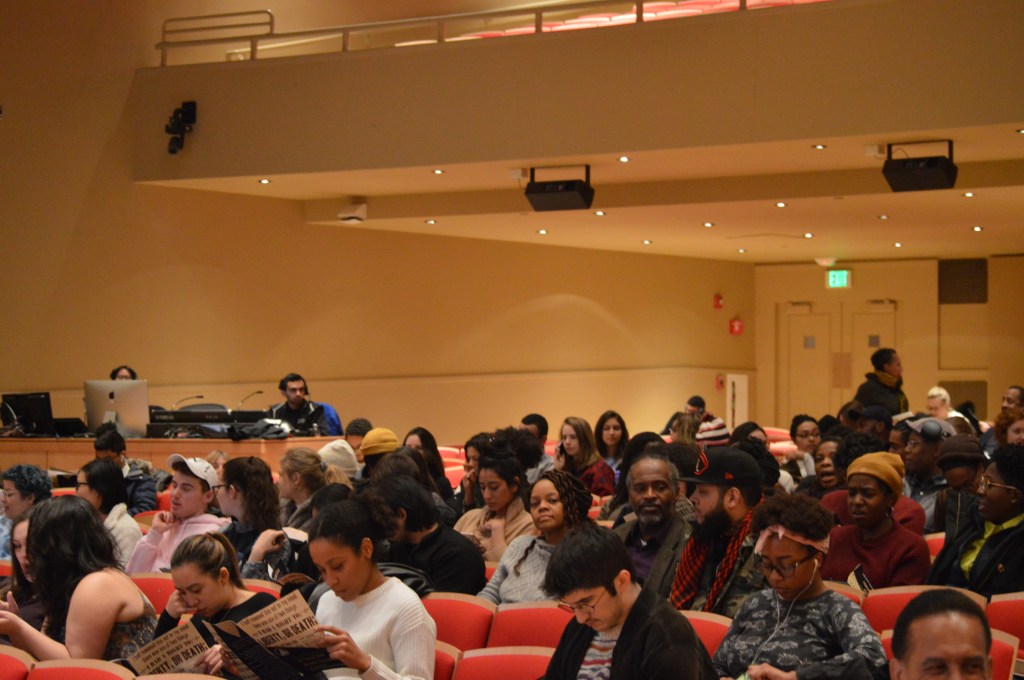
Alexander also said that white supremacy in law enforcement is “a system that we were willfully blind to,” particularly after Barack Obama was elected president.
“We were awash in post-racialism and ‘we have overcome’ and nobody was trying to hear, right after Obama was elected, that some new racial caste system was alive and well,” Alexander said. “We supposedly had left the days of racial caste and systems of racial and social control behind.”
She called this post-Obama time period a “so-called era of colorblindness,” as people in the United States had believed that the nation had become a post-racial society and ignored prevailing issues.
Alexander also discussed the current political climate as detrimental to people of color, saying that “The politics of white supremacy that helped to birth the system of mass incarceration are the same politics that gave us Donald Trump.”
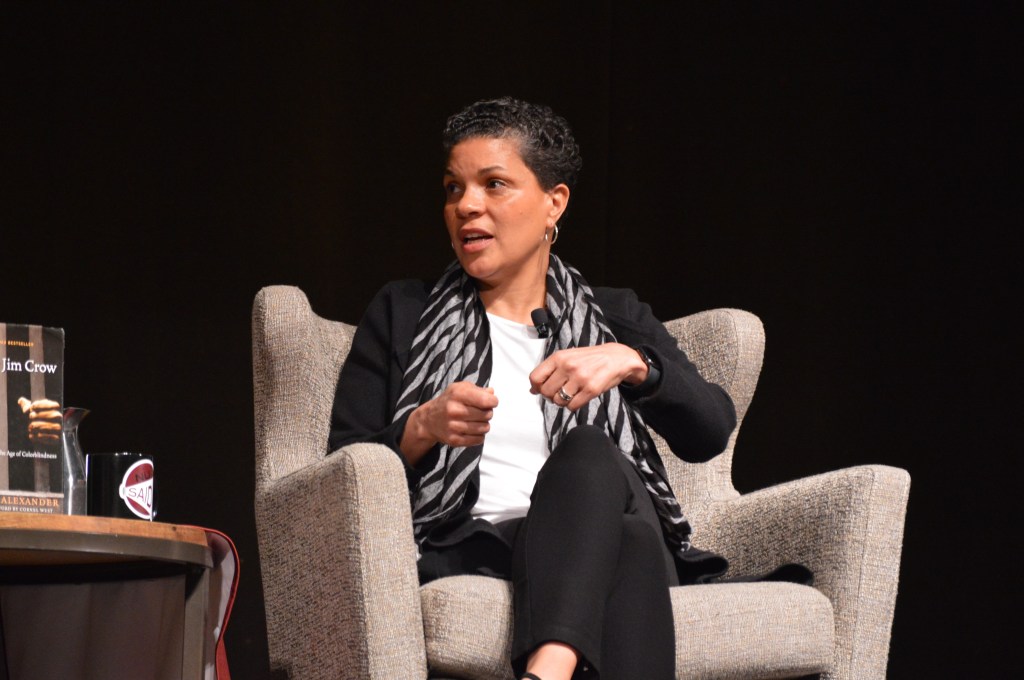
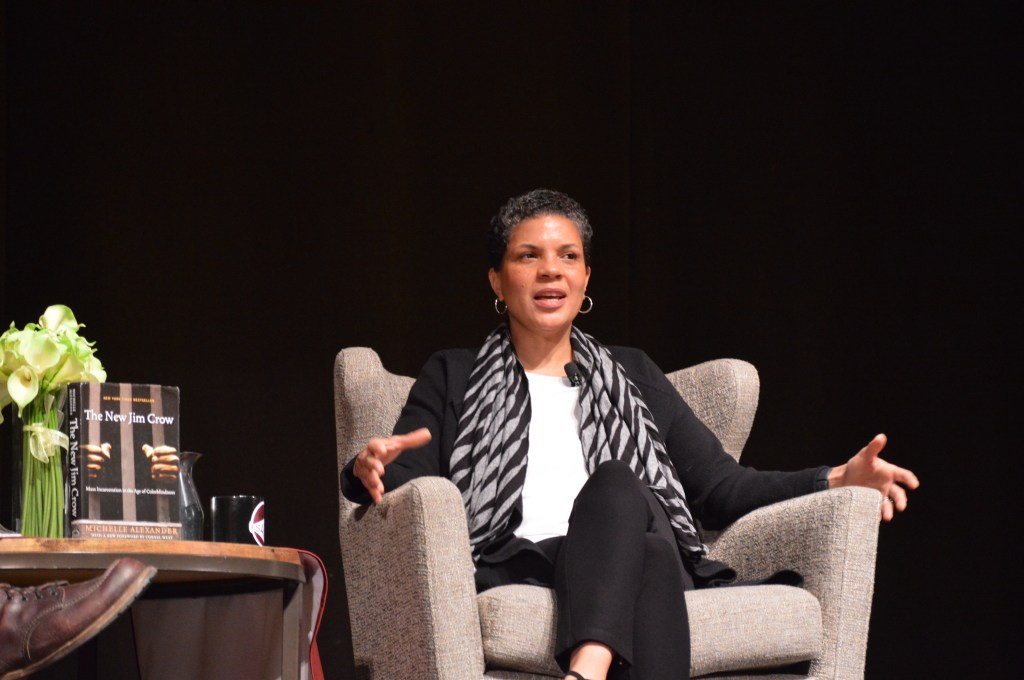
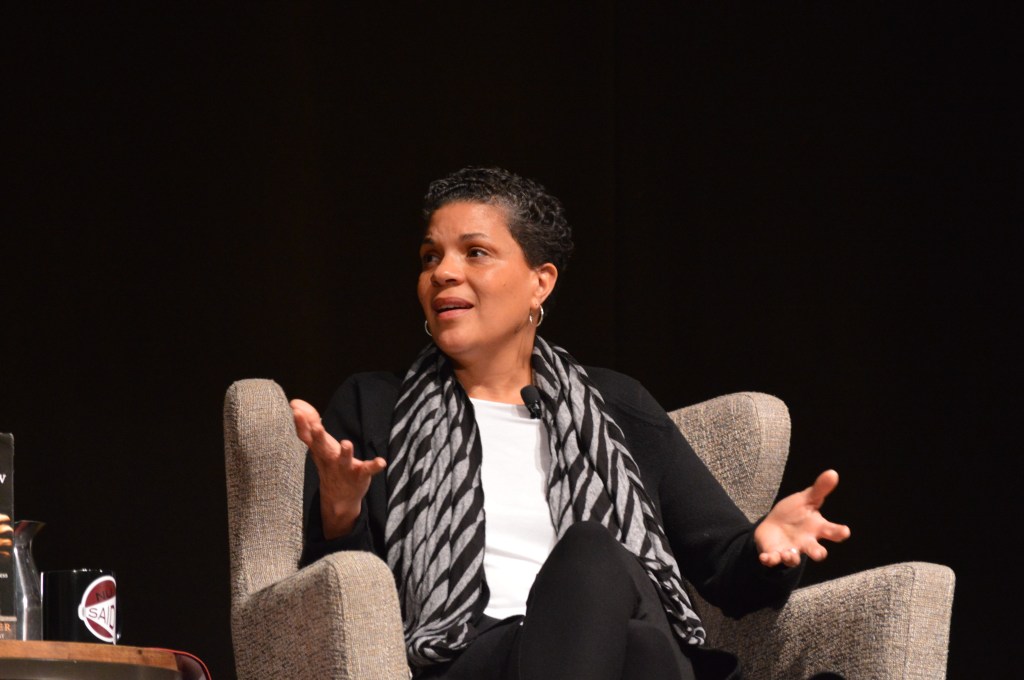
What Alexander calls “divide-and-conquer politics” is often used in campaigns, namely when candidates “divide poor and working-class people along racial lines, pitting them against each other, trying to inspire them to fear one another, to resent one another.”
“With the election of Donald Trump in 2016, we had a man who was running for president who was promising to build border walls and demonizing immigrants when just decades earlier we had presidents who were promising to build prison walls and demonizing poor folks of color in inner-cities,” said Alexander. “On some level, we can’t be surprised that it happened again.”
Despite these systemic issues, Alexander also expressed hope for the future of social justice activism saying, “There are opportunities for rebellion … in every classroom, in every barbershop and beauty shop, there is a way in which we can constantly be working towards the world we aim to co-create, wherever we are.”
She continued, describing what people can do to create systemic change: “If history teaches us anything, it’s that we will never break this cycle of birthing systems of racial and social control if we don’t awaken to the dignity and value of us all and allow no one… to be cast outside our circle of concern.”
Under Alexander’s advice, white Americans should close their eyes to colorblindness and open them up to awareness on the institutional racism of mass incarceration.
Original’s Music Showcase
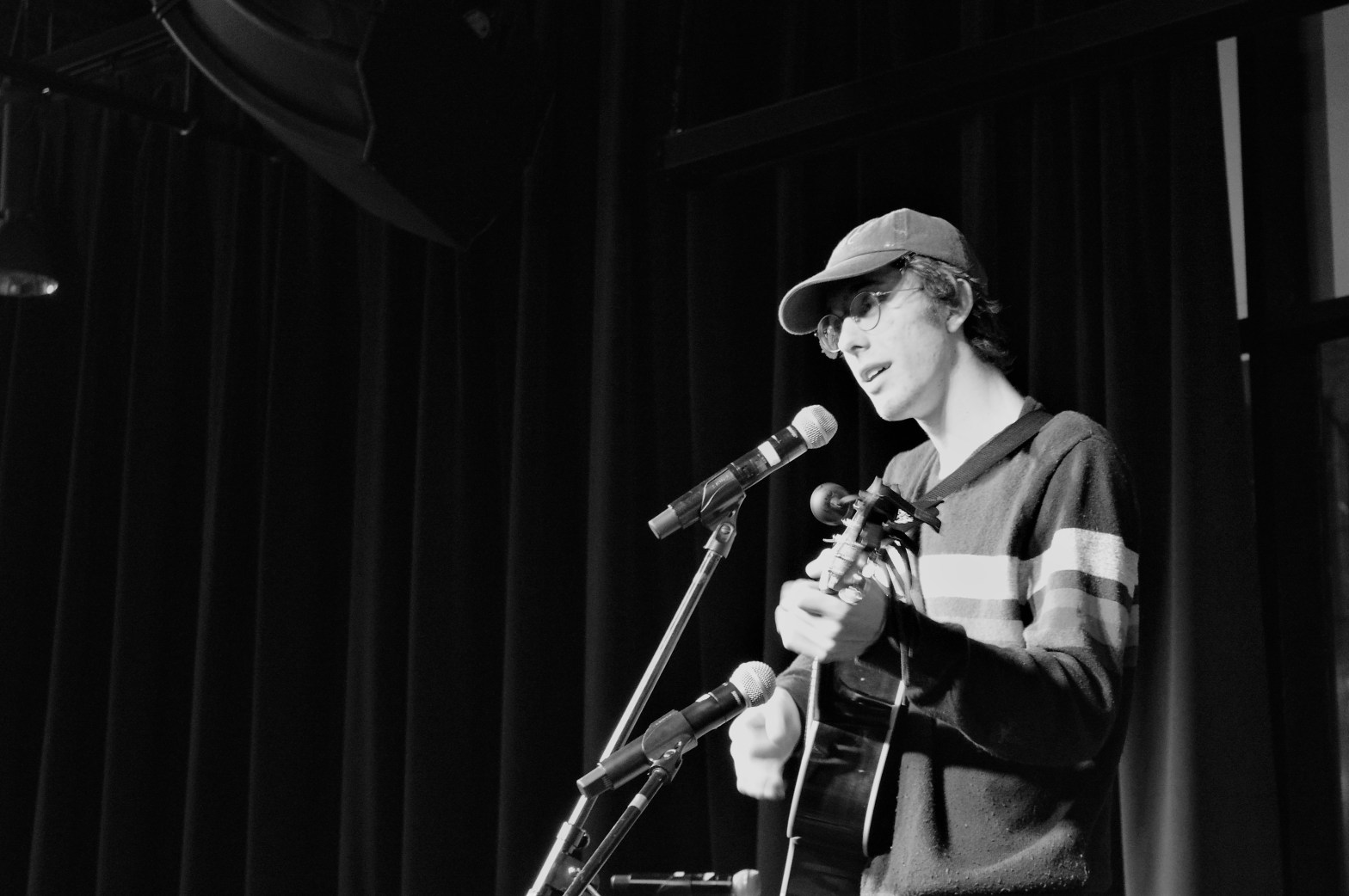
Northeastern’s Live Music Association Presents Original Music from students
February 18, 2020
Transcript
Northeastern University’s Live Music Association hosted the second part of their Original’s Showcase Tuesday Night in Afterhours.
This show featured student musicians and songwriters Vincent Costello, Calvary Dominique, Kalah Karloff, Eli Olsen, and Gatch.
The Live Music Association, or LMA, is the self-proclaimed “premiere music industry club on campus,” working to bring performances and showcases such as this one to Northeastern.
Club President Kevin Hassenfratz talks about the organization that he calls his home.
“We’re a club on campus that does a balance of both contracted shows where we host concerts here in Afterhours, and also a mix of open mics and original showcases that we have like this, showcasing some student talent.
~Kevin Hassenfratz
Hassenfratz has been involved in LMA for four years, and started out by volunteering for events like this one. As a fifth-year computer science major, LMA is a great way to stay involved with his passion for music.
“I love it because it really just brings people together and I have all these memories of concerts and just random people I meet in mosh pits, random people I meet standing around in line. Just these little vignettes in my mind that make it so enjoyable.”
“Playing my own music has been more of a recent thing, but it’s always been something that really interested me, getting into it a little bit now.”
~Kevin Hassenfratz
The Originals Showcase is a true snapshot of the Live Music Association’s goal to bring live performances to students.
“We decided to do a two-parter original music showcase between all of our students. It’s kind of a half-collaboration with the Songwriting Club, which is how we reach out to a lot of our students with original music.
It’s always such a cool feeling, to just see them and kind of keep track of ‘oh, I’ve seen these guys this many times.’ It’s also a great outlet to literally find bands to bring here.”
~Kevin Hassenfratz
The performers tonight brought their talent to the stage, both musically and comedically. Eli Olsen took the stage with an impromptu monologue, engaging the audience while he tuned his guitar.


“Oh, I went to New York City, the big apple. Sorry we didn’t link up… next time. I guess we could just link up now, hey Kimmy, what’s up?”
“Okay, that’s over, thank god.”
~Eli Olsen
Performer Gatch added a cover mashup of “All-Star” by Smash Mouth and “Wonderwall” by Oasis.
“So this is a song that people ask for a lot, but nobody ever actually plays.”
Somebody once told me the world was gonna roll me
I ain’t the sharpest tool in the shed
…
Cuz after all–rr,
You’re a wonder-star
~Gatch
Singer-songwriter Vincent Costello brought a more somber and heartfelt atmosphere to the audience.

For anyone interested in hearing more about live music and similar events on campus, join LMA at their co-sponsored concert this Thursday in Afterhours, featuring Boston hip-hop artists STL GLD with special guest Cliff Notez, or attend LMA’s biweekly meetings.
Any further details can be found on either Instagram or Facebook @LIVEmusicneu
Reporting for Northeastern University, I’m Quillan Anderson.
 Quillan Anderson