This is a digital magazine story, flip through the file here: https://online.flippingbook.com/view/425857102/
Plaintext:
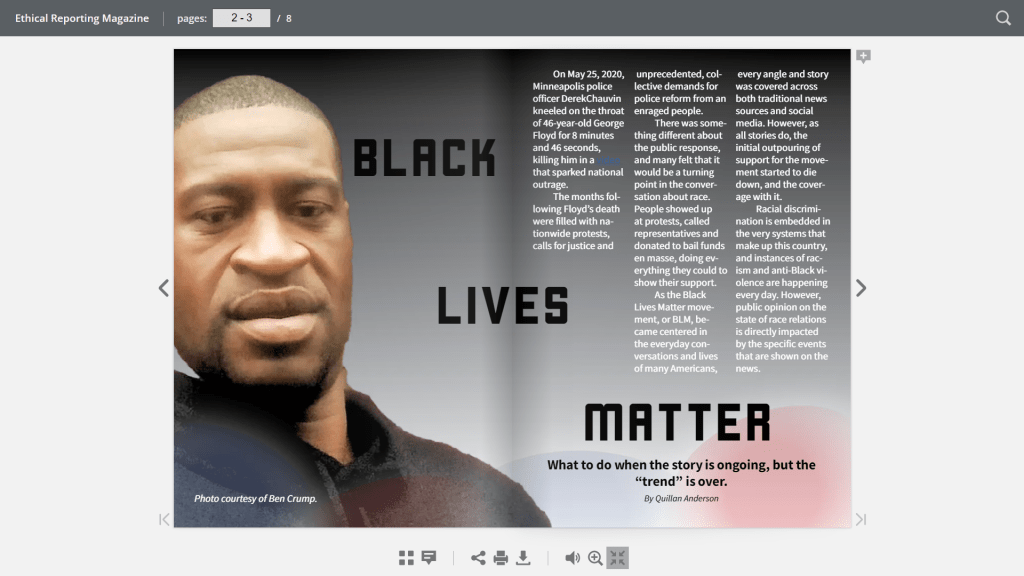
On May 25, 2020, Minneapolis police officer Derek Chauvin kneeled on the throat of 46-year-old George Floyd for 8 minutes and 46 seconds, killing him in a video that sparked national outrage.
The months following Floyd’s death were filled with nationwide protests, calls for justice and unprecedented, collective demands for police reform from an enraged people. There was something different about the public response, and many felt that it would be a turning point in the conversation about race. People showed up at protests, called representatives and donated to bail funds en masse, doing everything they could to show their support.
As the Black Lives Matter movement, or BLM, became centered in the everyday conversations and lives of many Americans, every angle and story was covered across both traditional news sources and social media. However, as all stories do, the initial outpouring of support for the movement started to die down, and the coverage with it.
Racial discrimination is embedded in the very systems that make up this country, and instances of racism and anti-Black violence are happening every day. However, public opinion on the state of race relations is directly impacted by the specific events that are shown on the news.

A survey by Civiqs shows that the biggest changes in public opinion on race relations happen directly after large, notable events that typically had extensive news coverage. The Charlottesville rally marks the first point since January 2017 that Americans thought race relations were “getting worse.” The most prominent show of that same opinion is in 2020, directly following the murders of Breonna Taylor, Ahmaud Arbery and George Floyd.
As BLM made headlines, each article and broadcast formed the public opinion surrounding racial tensions in the United States. Support for the movement peaked amongst American adults in the days after George Floyd’s death and reflected the coverage the story was receiving on the news and social media.

In a study conducted June 4-10, 2020, around the same time that the Civiqs survey documented the peak in support for BLM, a Pew Research Center survey showed that 84% of Americans were following the George Floyd protests either “very” or “fairly closely.” The study also found that 37% of U.S. adults were talking about the protests “almost all” or “most” of the time, and another 48% were “sometimes” discussing it.
However, there is a significant difference in public opinion when the responses are sorted by race.
While Black, Hispanic/Latino, and other people of color have consistently and majorly supported BLM, all increasing in the aftermath of George Floyd’s death, early June is the only time that a majority of white people in the United States supported the movement at all.
 Black Americans consistently remain around 76% in net support of BLM |  Other races remain around 13% in net support of BLM, peaking at 60% in June 2020 |
 Hispanic/Latinos remain around 26% in net support of BLM, peaking at 68% in June 2020 |  White Americans remain around -17% in net support of BLM, peaking at 7% in June 2020 |
“The unfortunate reality is that most white Americans are personally not directly impacted by racism,” said Mark Warren, a sociologist at the University of Massachusetts Boston and author of “Fire in the Heart: How White Activists Embrace Racial Justice. “We still live in a very segregated society, so it’s easier for white people to just become passive or accepting of the situation without the sense of the urgency of it.”
While the number of annual police killings, specifically shootings, has remained the same since 2015, media coverage of these instances has fluctuated again and again.
According to a FiveThirtyEight analysis of cable news broadcasts and online news headlines, the phrase “Black Lives Matter” appeared less than half as frequently between 2017-2019 as in 2014-2016.

Journalism is a field that lies between public service and entertainment; newsrooms often have to balance timeliness with accuracy, engagement with importance and profitability with integrity. Journalists have historically served as gatekeepers of knowledge and while they do not tell their audience what to think, they do have control over which stories the public knows.
Comprehensive media coverage is important to avoid what journalist and author Caleb Gayle called “wholesale forgetting,” where vital information about history or current events is effectively lost due to a lack of accurate reporting.
Gayle referenced the Tulsa Race Massacre of 1921 as an instance where history was nearly forgotten and credited Mary E. Jones Parrish as being essential to our remembrance and understanding of it.
The massacre took place in Tulsa, OK, where a white mob burned down the Greenwood District, also known as “Black Wall Street.” Historians believe as many as 300 people died and more than 800 were treated for injuries. 35 city blocks were destroyed including churches, schools, businesses, a hospital, a library and as many as 1,256 homes.
Unfortunately, much of the news coverage at the time granted primacy to the Mayor and other officials, taking their statements as fact without further investigation.
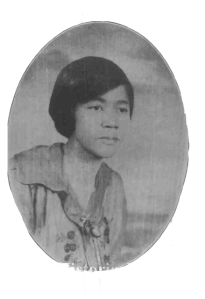
Instead, Parrish, who was a teacher and journalist in Tulsa, went around on her own and talked to residents, took in witness statements and assessed the value of buildings that were burned after the event. She later documented as much of her and others’ experiences as possible in her books “Race Riot 1921: Events of the Tulsa Disaster” and “The Nation Must Awake: My Witness to the Tulsa Race Massacre of 1921.” If it weren’t for her careful documentation, it is unlikely history would so vividly remember the massacre at all, let alone accurately.
In this way, it is clear that media coverage and other methods of spreading awareness can have an astonishing impact on what the public understands and believes.
Protests and media coverage can either go hand-in-hand or be diametrically opposed. News coverage can help to spread the message of a protest or event – without necessarily determining if that message is right or wrong – or misrepresent it completely. When protests and media coverage are in sync and things run smoothly, the protesters meet their goal of getting attention on the issue and reporters meet their goal of fairly and accurately informing the public. When they are out of sync and seemingly misunderstand each other, the situation can become volatile and inflammatory. Nevertheless, they nearly always affect each other. If protests are being reported on, more people either support or oppose them making them a much bigger topic, the bigger a protest is the more coverage it receives, and so on.
The statement “Black Lives Matter” is not a debate. Human rights are not something to be argued. Journalists need to avoid false equivalencies or a blind commitment to neutrality. They need to continue to amplify the voices of those they have historically considered voiceless.
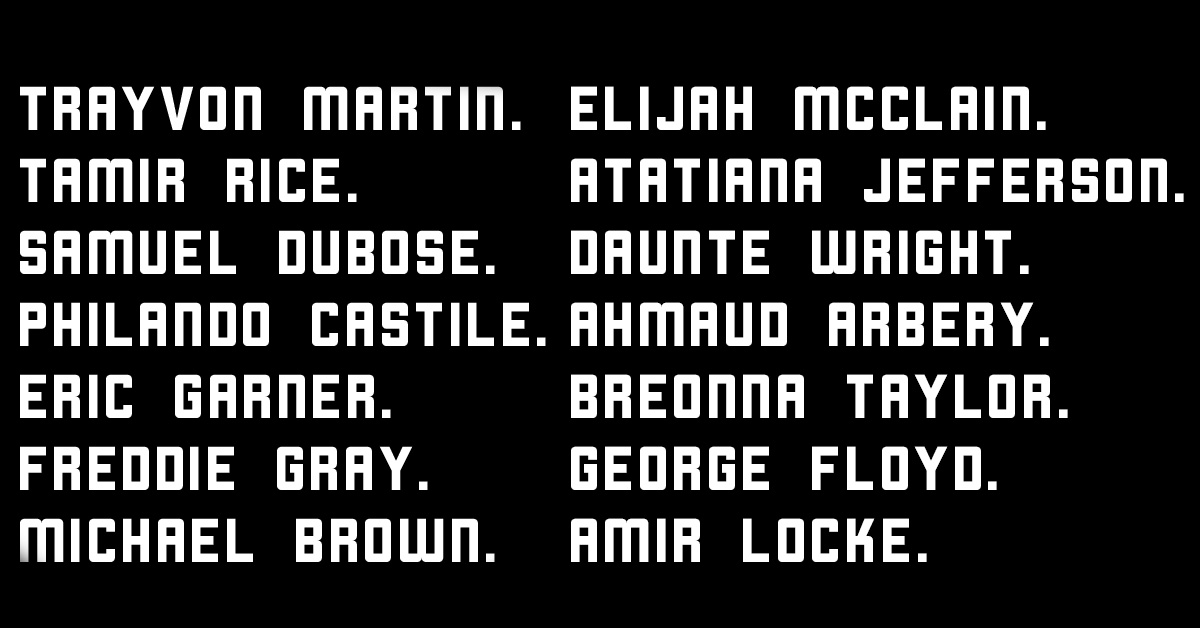
We must say their names:
Trayvon Martin.
Tamir Rice.
Samuel DuBose.
Philando Castile.
Eric Garner.
Freddie Gray.
Michael Brown.
Elijah McClain.
Atatiana Jefferson.
Daunte Wright.
Ahmaud Arbery.
Breonna Taylor.
George Floyd.
Amir Locke.
 Quillan Anderson